Unless You’re Chilean
We’d been in Buenos Aires for two whole weeks, so it was time for a trip. Steven had had the brilliant idea to go to Ushuaia, in Tierra del Fuego, for summer solstice because it would be as far south as we could get (without going to Antarctica – and don’t get Sue started on that one) and, therefore, we would witness the longest day of the year: 17 hours, 19 minutes, 52 seconds, to be exact with sunrise at 4:52 a.m. and sunset at 10:11 p.m. I said what I usually say to Steven’s brilliant ideas (which are very very very rare): Let’s go!
And so we did. We planned the trip before we left Maryland. That meant taking a suitcase that included semi-winter wear since the beginning of summer in the extreme south is not exactly what I would call warm. There at the end of the Earth (just like in Chicago), the natives start wearing shorts when the temperature hits 50 degree F, but we do not. Our puffy coats served us well.
The end of the world is far. From Buenos Aires, it’s a 3.5-hour flight, 3,164 km — and I say that first because it’s a bigger number — or 1,966 miles — still a pretty impressive distance (roughly the same distance as Chicago to LA) . We left Thursday morning and made it with time to spare after Steven caught the fact that we were about to head to the wrong Buenos Aires airport –oops. Luckily, we were paranoid about long lines so we had plenty of time to get to the farther airport, which is much larger and much less chaotic.

Let me clarify: Ushuaia is the southernmost city in the world, unless you are Chilean. They have a small outpost of about 3,000 people called Puerto Williams. Ask any Fuegino (a person from Tierra del Fuego) and they will launch into a defense of Ushuaia and explain that Puerto Williams does not meet the definition of a city. There’s not even any shopping! However, the Chilean government officially changed its definition of city, so technically Puerto Williams, on the south side of the channel that separates the two countries, is the end of the Earth. Many tourist sites judiciously call it the southernmost town, avoiding the controversy altogether.
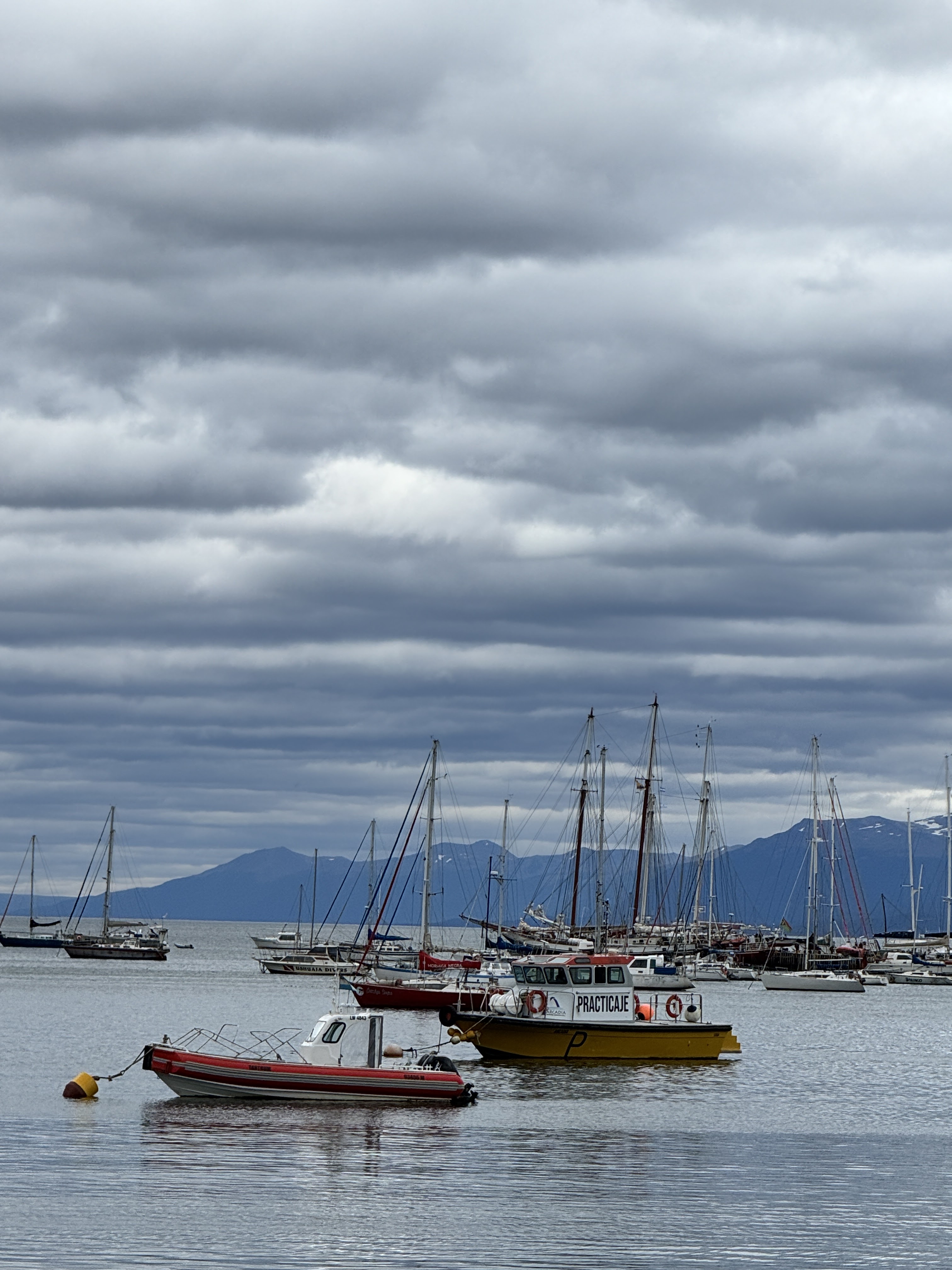
We arrived Thursday afternoon and checked into Cilene del Fuego Suites and Spa. We liked it because it has a living room as well as a bedroom plus a heated pool and sauna. Being the forgetful person that I can be these days, I realized that I forgot my anti-seasickness patches as soon as we got to the airport that is about an hour from our place (last time I forget all my clothes, but at least we were at the airport that was near our house) and we had a catamaran tour scheduled for Sunday. Argh! I got some dramamine (there’s no scopalamine in Argentina) and I just hoped it would work. From the pharmacy, we walked around town looking for lunch and found the Patagonia Brewing Company, a chain we had been in to watch the World Cup in El Calafate. It’s a fine brew pub, nothing special, but it served the purpose and we had a view of the Beagle Channel, named for the HMS Beagle, upon which Darwin would later famously sail.
Argentinian suppers start late, 8 p.m. brands you as a non-native, but we headed to dinner at about 8:30 p.m. since we weren’t able to make a reservation and thought we might have a wait, We were seated right away, but one of the great things about restaurants here is nobody is in a rush. We chose Casimiro Biguá, another small chain, because Steven was delighted that there was lamb, but there was also something for me to eat. The waiter recommended a delicious cabernet savignon from Mendoza and we took our time ordering. Seated next to us was a couple from Rotterdam, The Netherlands, and we ended up chatting with them. The food was delicious, but we only managed to spread the meal out two hours.

Friday we had an excursion to Tierra del Fuego National Park — a place that has fascinated me since I was a kid. A park at the end of the world! So cool! Our original plan had been to do some hiking, but my back had different ideas. We chose a trip with several short and mostly flat hikes in the park. Our guide, Ludmilla, and driver, Jorge, picked us up promptly at 9 a.m. and it turned out that we were the only ones on the tour. Perfect!
The snow-capped mountains provided backdrop for the sparkling blue lakes and lush emerald green forests. We drove along route 3 to the end of the Panamerican Highway and saw the post office, where once you could mail a postcard with the postmark “end of the world.” I’m guessing governmental cost-cutting shut it down.

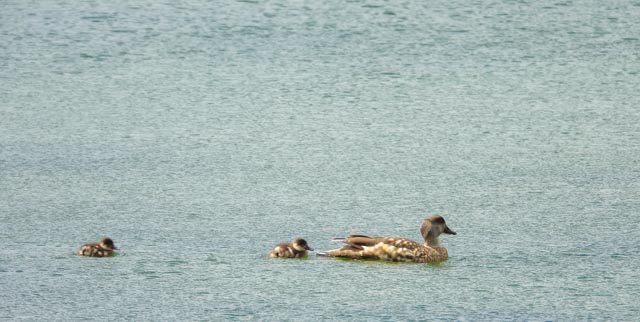


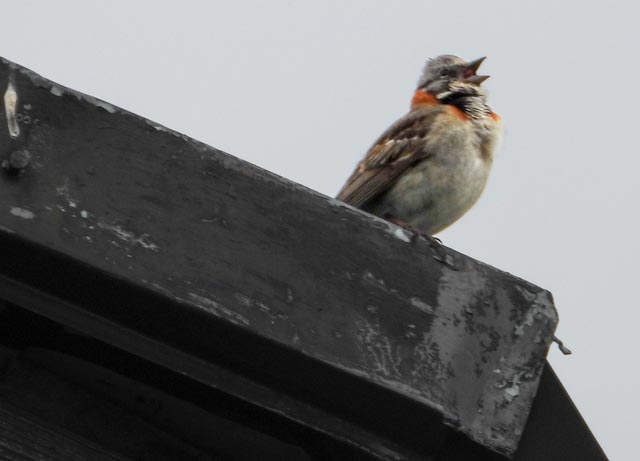
We were lucky enough to see a condor (apparently a rarity), Upland geese and their baby, and some other birds. (Forgive me, Robin, I didn’t write down their names.) The several short hikes were perfect for me and gave us a great sense of the majesty of the park. We’ve noticed in our travels that (no surprise here) the U.S. is tops when it comes to monetizing nature. While there was a gift shop near the entrance to the park, there were no Parque Nacional de Tierra del Fuego souvenirs. Just the stuff all the tourist shops in town carried. The tour ended around 3 p.m. and we relaxed in the pool and sauna.
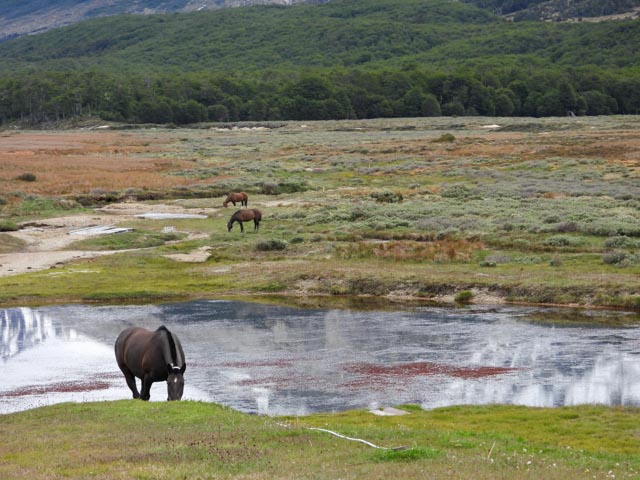
Horses also wander the parks, but they have owners who just like the access to free food.
When we arrived Thursday, we didn’t have plans for Saturday, but the hotel suggested a driving tour east on Route 3. Since hiking and lots of walking were out, we went for it. At the tour office, I asked Gustavo, who was booking our tour, what his favorite restaurant was and he said Paso Garibaldi, which confirmed our choice for the evening. We hit the pool again and chilled until our 9 p.m. dinner time (we were the early arrivals) at Paso Garibaldi. A duo of a guitarist and singer performed a mix of American standards with a smattering of Spanish songs, but when they finished we got what is now the standard background music of old American songs slowed down to half speed and mostly sung by breathy women. The food was above average, but not great (especially compared to the meal we had Sunday night).
We set the alarm for 4:10 a.m. Saturday, Dec. 21, so we could be awake for the exact moment of the solstice. OK, that was a little weird, but cool. We went right back to sleep anyway until the alarm went off for our second big day.
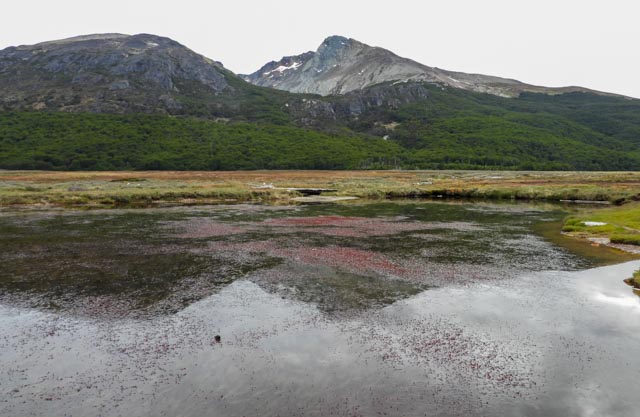
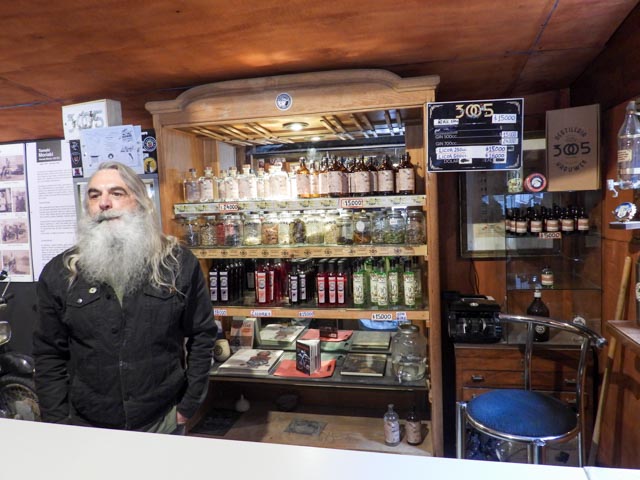
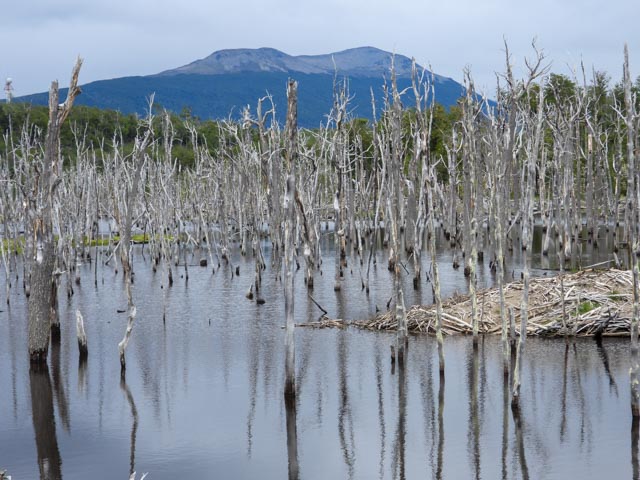
Saturday, we hopped in the next van to discover that since Gustavo had squeezed us in for the tour, we would be with an Ecuadoran family. That was fine and Lucas, the tour guide, said he would speak English to us when we needed, but really we did most of the tour in Spanish. The drive was pretty, but I’m not sure I would recommend it to someone with more mobility than I currently have. It was a lot of driving to get views of a couple of lakes (Fagnano and Escondido). We did cross the Andes at Garibaldi Pass. (Oops, looking through my photos, I realize that we also walked on a beautiful peat bog and saw a giant beaver damn and the forest of dead trees that this invasive species leaves behind.) We had expressed interest in a stop at Haruwen, where there is a tiny motorcycle museum (Pan American Highway riders) and a gin distillery and it was totally worth it. We may have bought a bottle since it’s made with local herbs.
On top of that, we got an excellent souvenir: half a stamp in our passports from the southern end of the highway. It’s really for riders who traverse the whole thing. You get the other half stamp in Prudhoe Bay, Alaska, the northern end of the 19,000-mile road. (No, we have no plans to drive it (but you never know … wonder if she will think this is another one of my “good” ideas?!?)




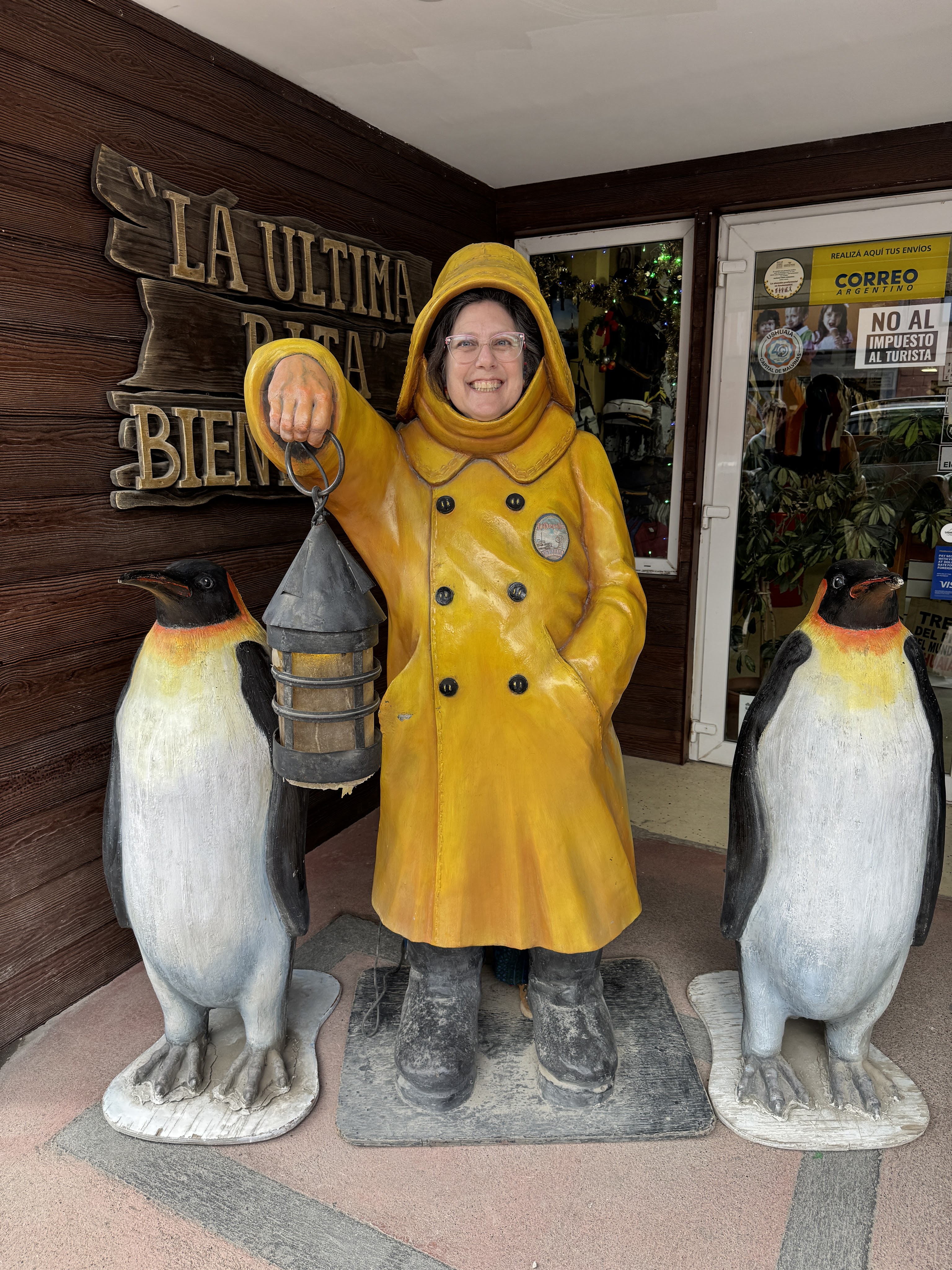
The trip includes a stop at a restaurant for the famous lamb lunch, but, of course, these things are always a bit of a tourist trap. Since Steven had had lamb in town, we opted to go light and just had some empanadas. By the time we got back, it was about 4 p.m. When in a tourist town, you have to hit at least one tourist restaurant. Taverna del Viejo Lobo was it for us. In an attempt to get people to live at the end of the world, Argentina built a prison, which fueled job growth. The restaurant combined pirate and prison themes seamlessly and provided a chill, no-frills meals. Plus, they had pingüino de la casa!
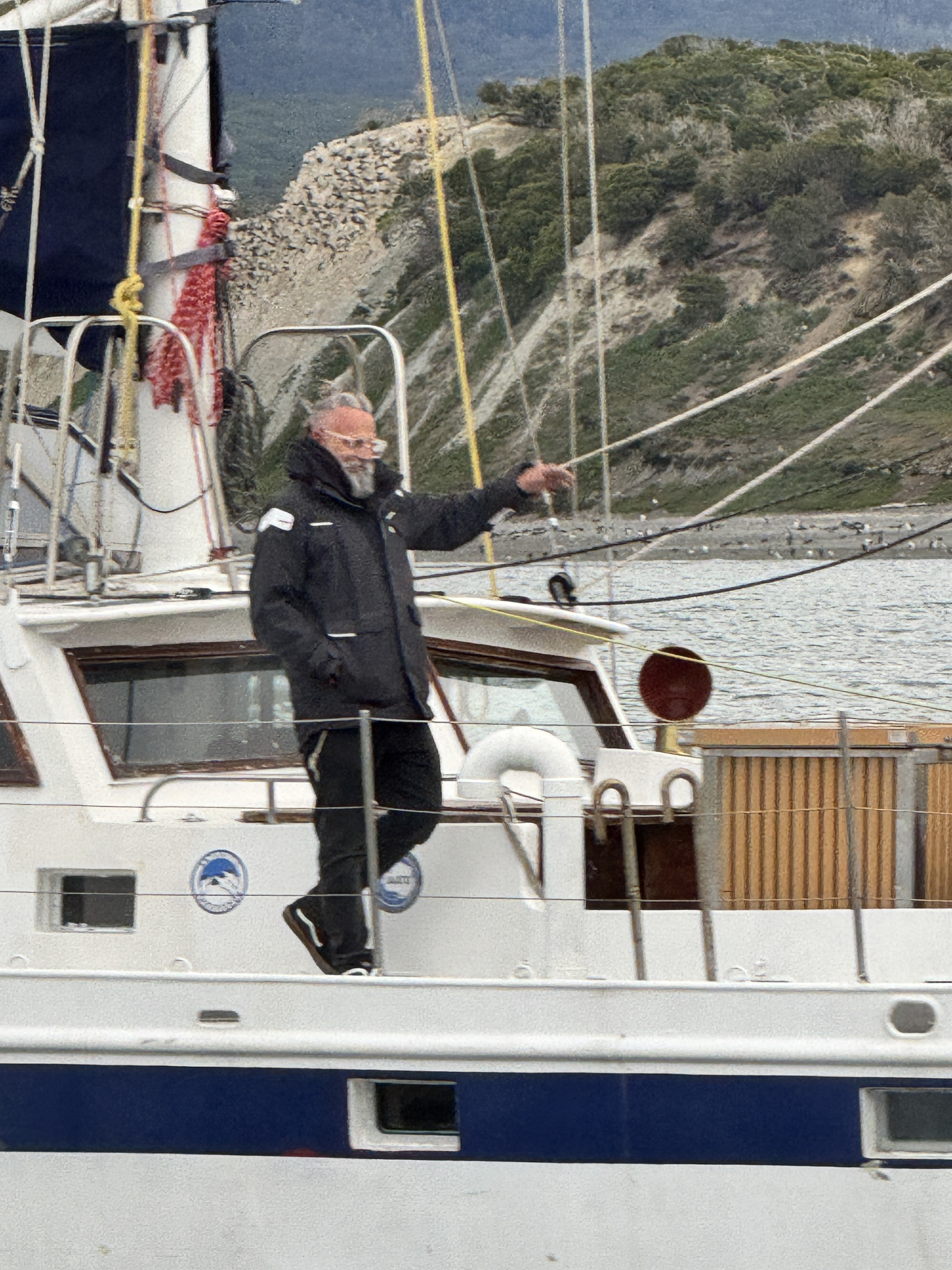
Sunday we didn’t have to get up early since we had a catamaran tour on the Beagle Channel (whose eastern part is the border between Argentina and Chile) out to Isla Martillo to see the penguins. Nice not awaken to an alarm. I was a teensy weensy bit nervous (if teensy weensy is a synonym for really really really) about my ability not to spend the whole five-hour trip puking, so we went to the tour office to ask about the weather. Luckily, it was expected to be fairly calm and I gamely decided to go for it.

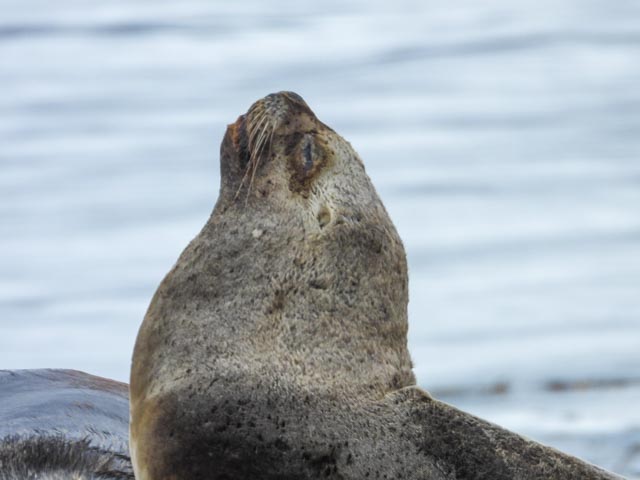
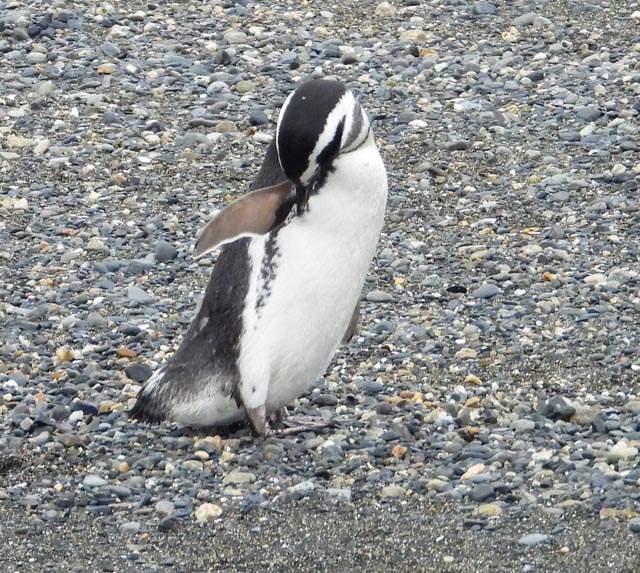
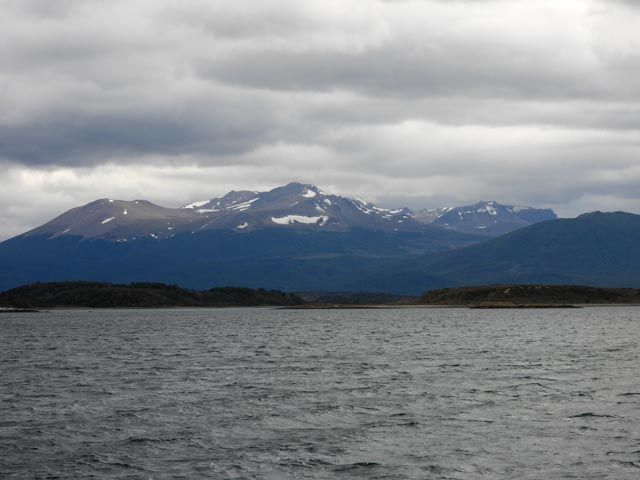


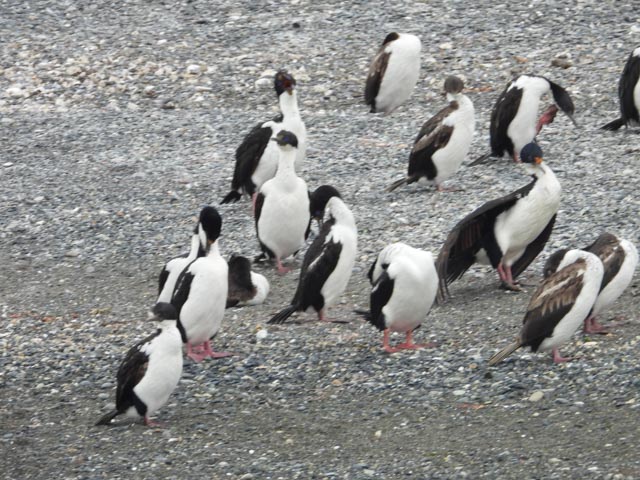

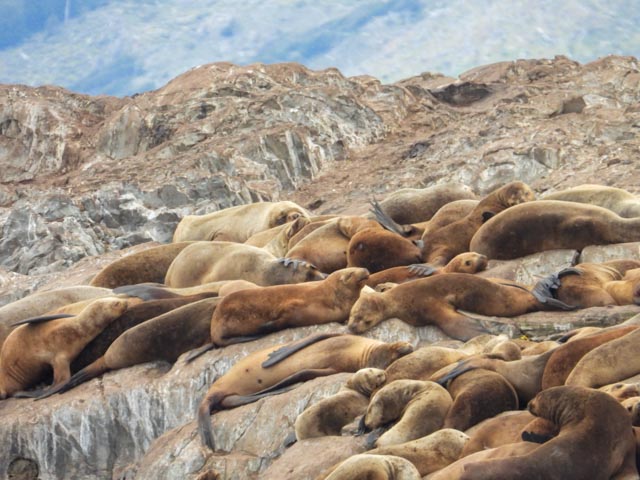
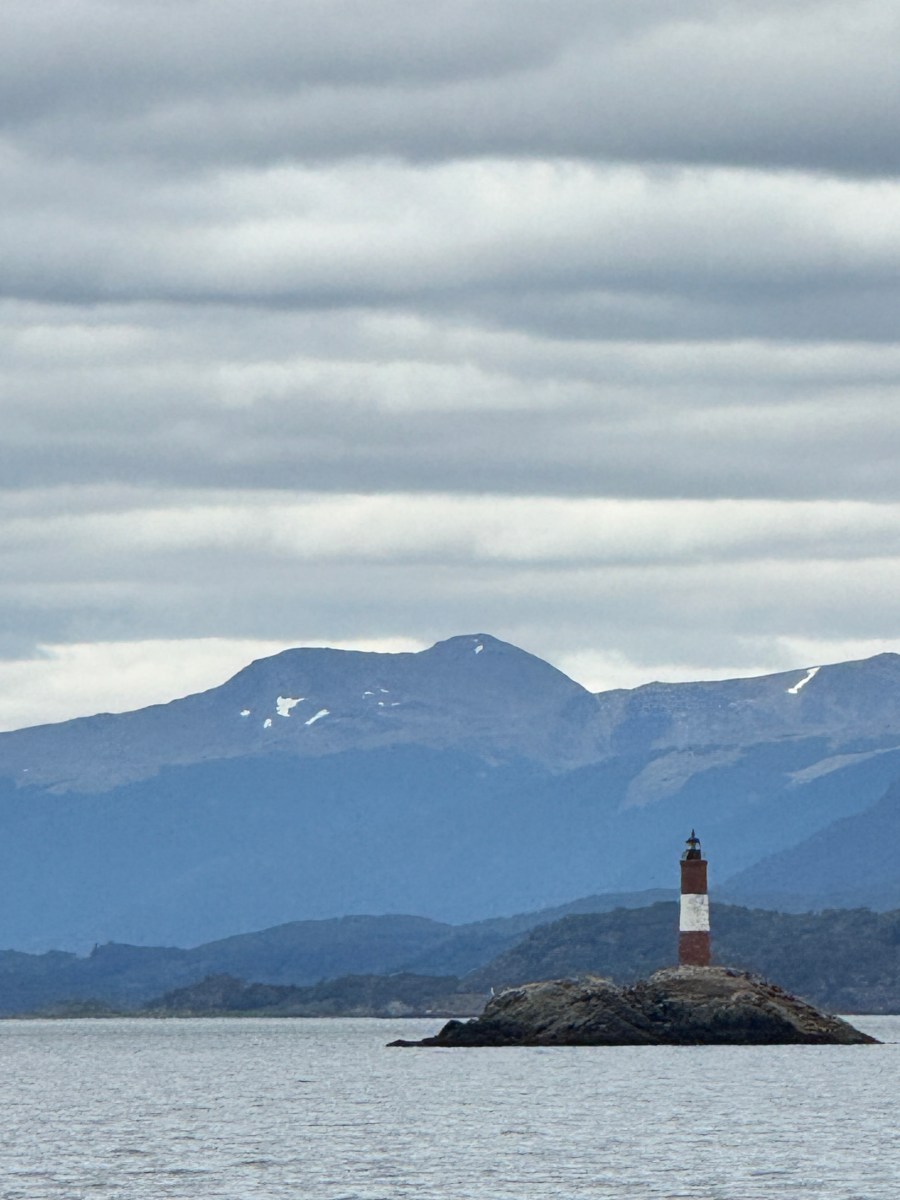
I’m so glad I did! The dramamine worked and I really enjoyed the ride. We stopped to see sea lions (not really a big deal if you’ve lived in the Bay Area, but still fun) at Les Eclaireurs Island, where what the Argentinians call “The Lighthouse at the End of the World,” sits, although it is not the one that inspired Jules Verne, since it was not built until after the book was published.
Then, we pushed on through the narrowest part of the channel (4 miles wide) and headed out to Isla Martillo and the penguin colony upon which Magellanic and Gentoo penguins live. We did not see any Gentoo penguins, but our disappointment disappeared when we heard ballena or whale. The whole catamaran rushed outside. I spotted the tour photographer and figured she knew where to look, so I staked my claim next to her at the front of the boat and Steven took one side. We were lucky enough to see a sei whale breech several times. I saw two different whales and Steven saw one. It totally made the trip. Sorry I didn’t get any pics, but I was too busy living in the moment.





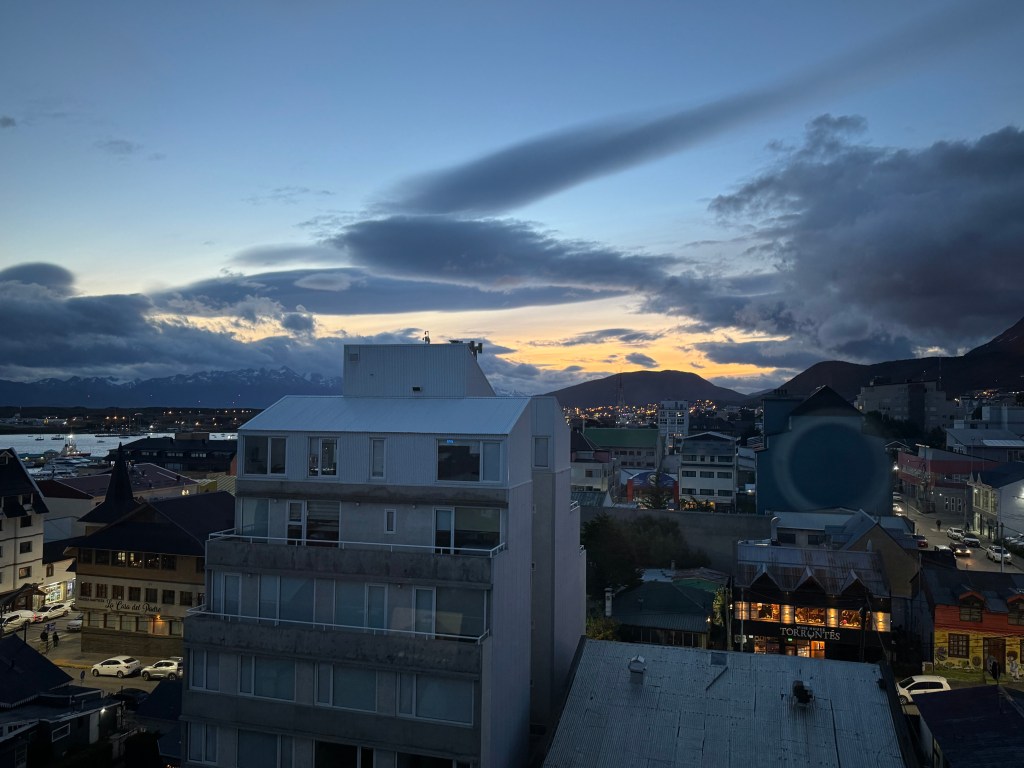
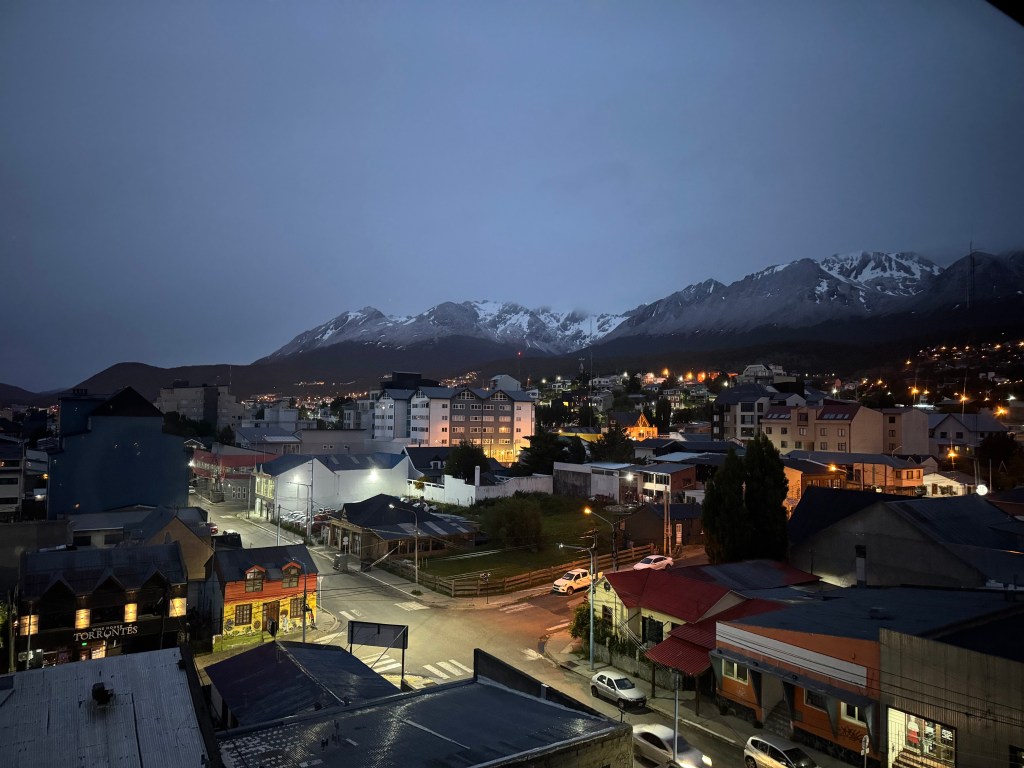
We returned a little after 8 p.m. From the window of our hotel room, we could see a restaurant that intrigued us. We had bought a bottle of wine at the shop below, but weren’t quite sure how to get in or what it was like. We did find the menu online and it sounded delicious so we decided to give it a shot. When we got there, there was only one other couple in the place, sometimes a warning sign, but we stayed anyway. Wow, we are so glad we did. You’ll probably never get to Ushuaia, but if you do and if it survives, you should definitely go to Torrontes Wine House. The name is already confusing because we thought that was the wine shop, but I guess it’s also the restaurant. Christian, the owner, (gossip time) used to run Paso Garibaldi and was married to its owner, but they split and eight months ago, he opened his own place.
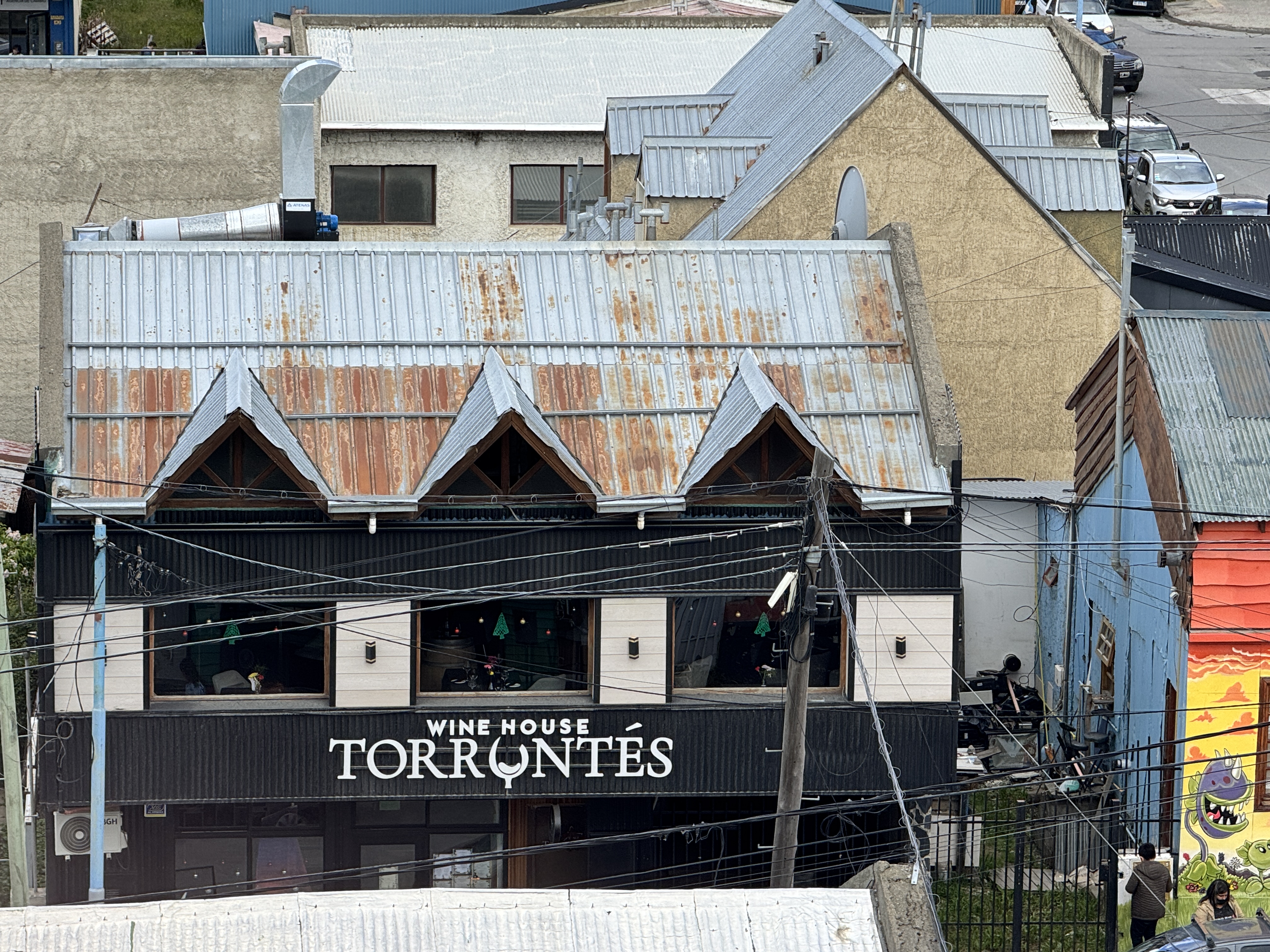
The food was great. In fact, Steven said it was one of the 10 best meals he ever ate. It was beautifully presented and delicious. We suspect he won’t last long because he’s completely idealistic and doesn’t seem to be the best at marketing, but the food was fabulous, as was the wine he recommended. I had the best eggplant parmesan ever (it was a small appetizer portion) and very tasty risotto curry with veggies. Steven had a meat empanada and then lamb skewers with grilled veggies. We finished it off with cubes of chocolate mousse atop a dried fruit cookie. Plus, Christian kindly gave us a cabernet franc to pair with the dessert. What a great final dinner there and not pricey at all, considering Ushuaia is not cheap.
We saved Monday, our last day, for souvenir shopping. Neither Steven nor I are shoppers, but we needed a fridge magnet. I had seen a shirt I liked, but exorbitant price aside, I realized that we just emptied out a storage locker so there was no point in filling it back up again even though I really wanted my very own pingüino de la casa. We got to the airport a bit early, hung out in the very tiny lounge and had an uneventful flight back to BA, where we will remain until our next adventure: Mendoza.
 Doing It On The Road
[heart] Brandon Cooney reacted to your message:
LikeLike
I love the lighthouse pic that you chose to open with 😃 and all the good words too. You rock.
LikeLike