
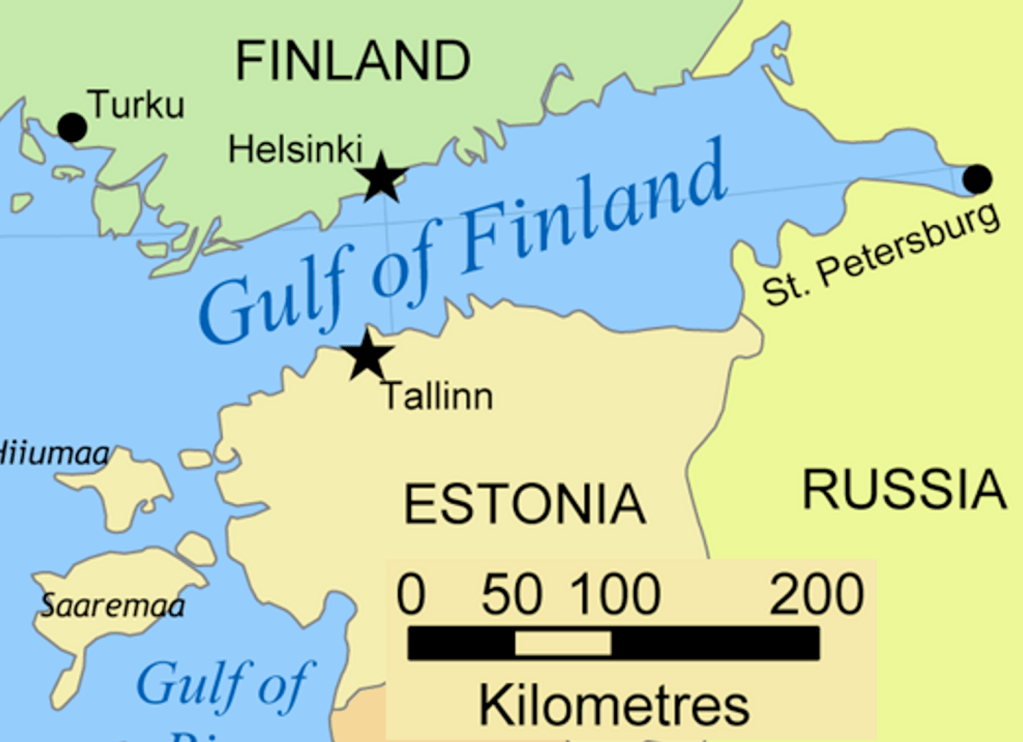
Sorry! I couldn’t resist. I think Steven’s influence is taking over (an excellent joke!) As you may have figured from that groanable title, we spent the weekend in Tallinn, Estonia. Tallinn isn’t a place we spent a lot of time thinking about, but it’s a two-hour ferry ride directly south across the Gulf of Finland. If you’re that close to another country, you really have to go.
We used Tallink Silja line because I read that their ferries were the most modern, but there are two other ferry companies as well. The ferry can fit 2,800 people and 150 cars per crossing and it seemed pretty full, especially on the way back Sunday afternoon. A couple we met said one big incentive for Finns is the lack of taxes on booze and other items. The ferry is basically a floating duty-free shop and we saw many people on the return trip with dollies laden with cases of beer and “long drink,” which is basically a gin drink in a can.
But, I get ahead of myself. A friend suggested that we do a free walking tour and we thought it was a good idea since we only had a weekend to get to know the place. The tours are “free” in that you only tip the tour guide at the end and there’s no set price. On Saturday, we went straight from the dock (with a pit stop at a mini-market for some sustenance) to the tourist information center in the old town to catch our Communist Tour of Tallinn. For you youngsters, Estonia was part of the USSR in the bad old days. Those Baltic nations are not the ones that first come to mind when I think about the Soviet bloc, but they definitely suffered under it.
The country declared independence from Russia in 1918, but that only lasted a day because the Germans invaded. but wait, it gets worse. After the war, Russia invaded, but unsuccessfully and Russia was forced to recognize Estonia as a free nation in 1920 … until 1940 when the Soviet Union annexed Estonia, but wait, there’s more. In 1941, the Nazis invaded. Some Estonians cheered because the Soviet regime was so brutal, deporting thousands of Estonians to Siberia and other prison camps. Of course, they were to find out the Nazis definitely weren’t better. They killed tens of thousands of people and declared Estonia “judenfrei,” although about 1,000 of Estonia’s 3,000 Jews had fled behind the battlefront into the Soviet Union. Those included our guide’s grandmother, who was a Communist at the time.



Although Tallinn suffered the effects of WWII, the city itself mostly escaped being bombed, which left much of its charm intact.
After enduring three years of Nazi rule, The USSR invaded Estonia again, controlling the tiny nation of 1.4 million people until 1991. The aftermath led to a group of people without citizenship anywhere. After WWII, the Estonian government bestowed citizenship on people who lived in the country before its annexation and to their children. Others could gain citizenship by becoming proficient in Estonian and passing an Estonian history test. Not everyone did so. These people could get alien or “gray” passports that allow them to travel, but they are citizens of no nation. Many native Russians chose to have Russian passports as well.
Since 1995, any child born in Estonia may apply for citizenship, so the gray passports, of which there are about 69,000, will become a thing of the past.
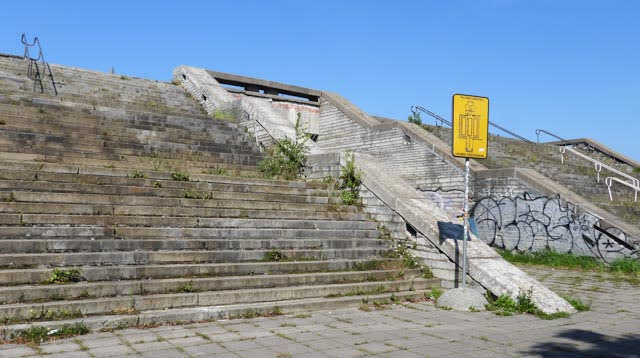
One other lasting legacy of the Soviet era is Linnahall, formerly the V. I. Lenin Palace of Culture and Sports, a decrepit and abandoned sports complex built in 1980 to host the sailing events of the Olympics. As our guide explained, construction standards got lower and lower as the Soviet Union aged. It’s most recent use was as a setting for the 2019 Christopher Nolan film Tenet. Efforts to find investors to rehab the site have been unsuccessful.
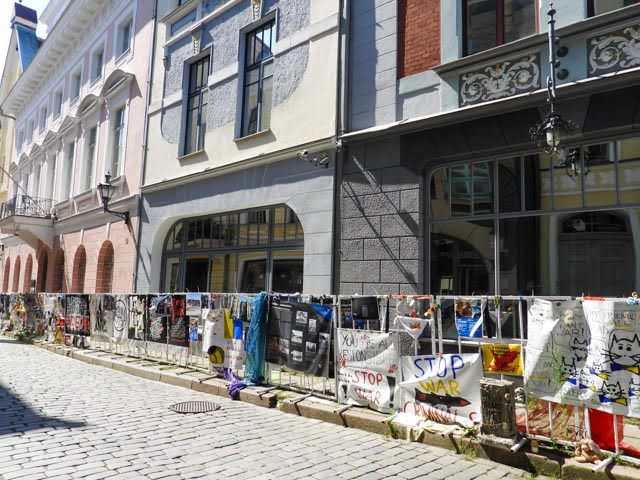
Having fallen victim to Russia’s globe-conquering mindset, you can imagine that the Estonians are nervously watching the war play out in Ukraine. A fence around the Russian embassy building is plastered with flyers condemning the Russian government’s actions.
After our Communist history tour, we checked into our hotel, had a bit of a rest and then decided to eat dinner at a Georgian Tavern named Tsibili. We couldn’t get a reservation until 8:30, so we walked back into the old town, found a bar that overlooked the street and sipped our drinks slowly as we watched the tourists go by. When we got to the restaurant, it was anything but crowded. One of the conventions that we have to figure out every time we go somewhere new is whether people make restaurant reservations or we can just walk in. We learned the hard way that Amsterdam is a reservation city. Apparently, Tallinn is not. Nevertheless, we had a delicious meal and then headed back to the hotel.
On Sunday, we had booked a Medieval Tour of Reval (the name of Tallinn until its 1918 independence), which means deer fall in German. One of the stories we heard on our tour was of a deer hunt in which the deer fell off a cliff, hence the name.

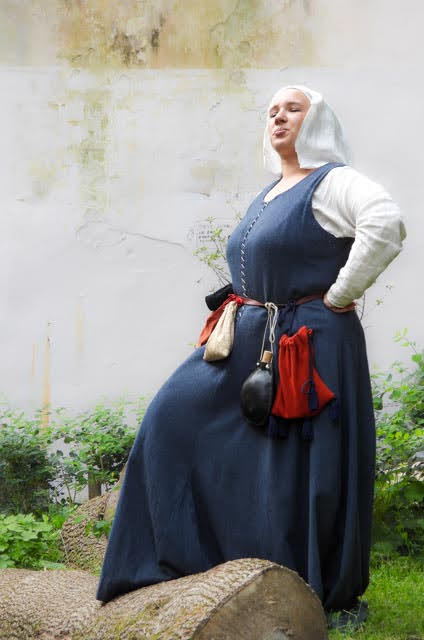

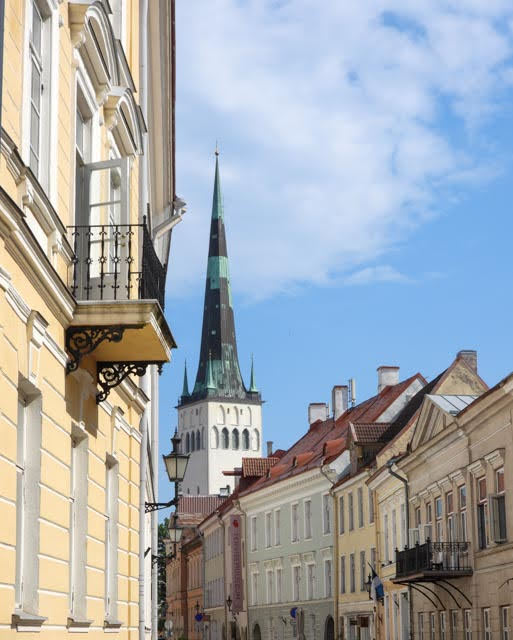
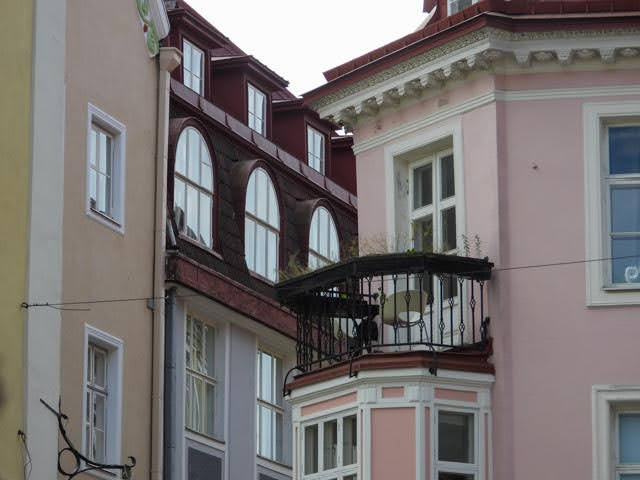

Tallinn’s medieval fortress dates back to the 14th century and parts of it are still standing, but its known history extends back to the landing of a Danish fleet in 1219. Control of Estonia flip flopped from the Danes to the Order of the Brotherhood of the Swords back to the Danes and then to the German merchants who had been invited to ply their trade in Tallinn. Several hundred years later, the King of Denmark, hurting for cash, sold his land in Estonia to the now-wealthy German Order.
The tallest medieval building in Tallinn is St. Olaf’s Church, which at its tallest stood 159 meters, or more than 521 feet high. It is now 123 meters, or 503 feet. The copper spire has been struck by lightning at least a dozen times. Three times those strikes led to major fires.
Our guide wore medieval garb and kept us interested throughout with volunteer opportunities. I tried to walk a tightrope from St. Olaf’s, but, alas, a seagull distracted me (or my medieval peasant alter ego) and I plunged to the ground, thereby receiving the honor of my name in a church records book.
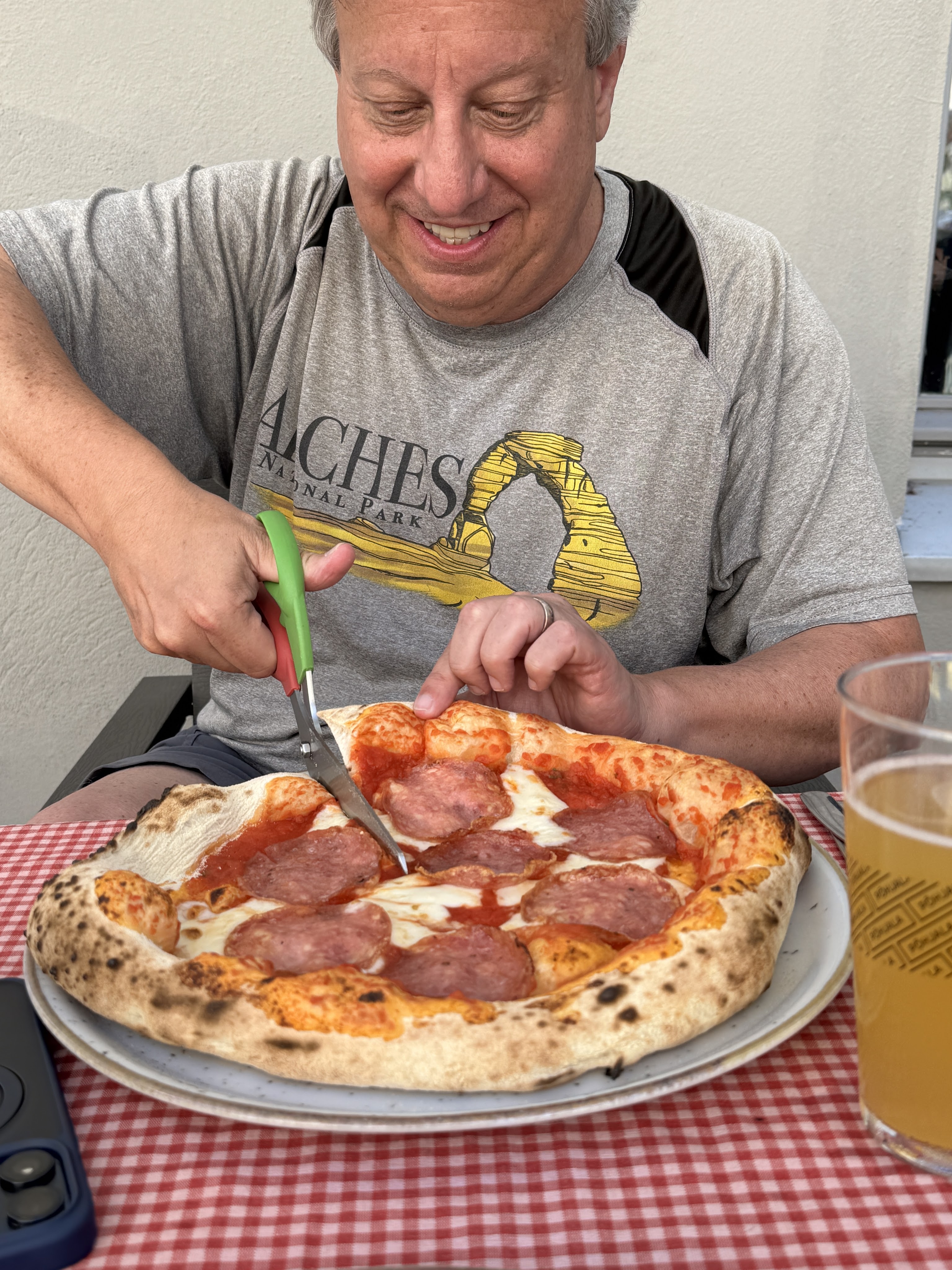
After the 90-minute tour, we retired to Margherita Pizzeria and Trattoria for some Estonian pizza. Not bad for not-New-York pizza. We then headed to the KGB Prison Cells, which is housed in the actual Soviet prison cells. The building started life as apartments and it is again, but the cells remain in the basement. It’s a small museum, but that doesn’t mean it doesn’t pack a big emotional wallop. Standing in a cramped room listening to tales of the torture of pretrial prisoners who included politicians, civil servants, intellectuals, veterans of the War of Independence, and regular citizens seems particularly creepy and cautionary these days.
OK, enough of that. After the KGB museum, we went back to the hotel, got our backpack and wandered over to the ferry terminal for the return trip.
 Doing It On The Road