
We arrived in Athens after a quick flight from Budapest on Monday afternoon. The cities could not be more different. Budapest is very green with mid-age and younger buildings set around the meandering Danube. It is a stately European city with wide streets and lots of green space. Athens is hot, dry, seemly unplanned and feels very much a rough and tumble city. The Acropolis towers over a city that has 3,000 year old ruins around random corners and under many streets and buildings.
Tuesday, we settled in, found a grocery store, scoped our neighborhood and Sue’s cousin Carol arrived for a short visit. Our AirBnB is the top two floors of a seven-story, newly-rehabbed building in an area called Exarcheia. It is described as the bohemian/student area; in reality, it is a neighborhood in transition from student/anarchist to upscale young professionals. It has lots of bars, restaurants, and just about a million coffee shops.
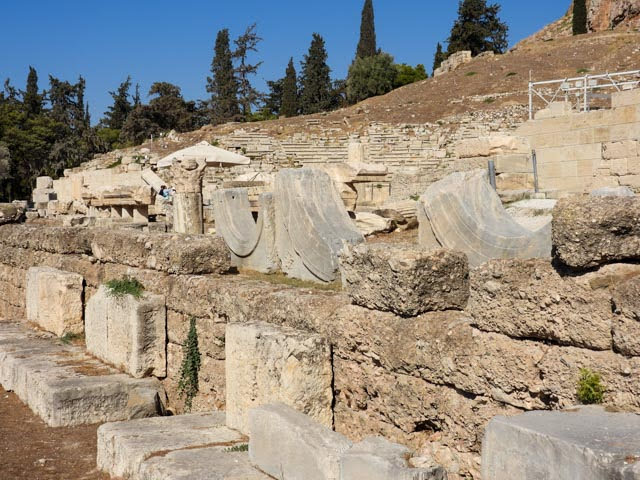


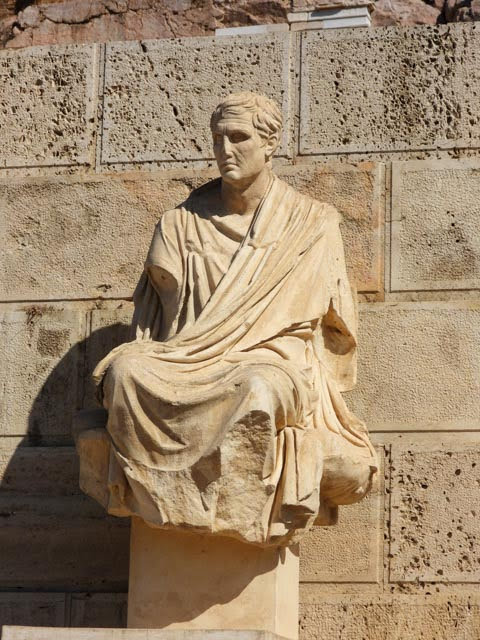
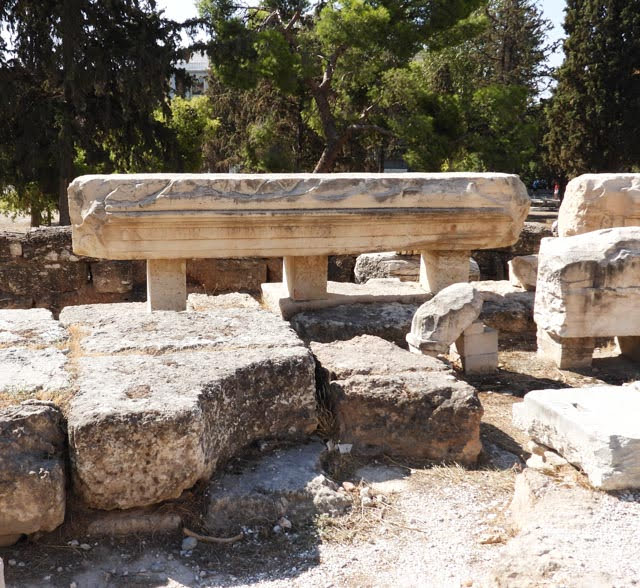
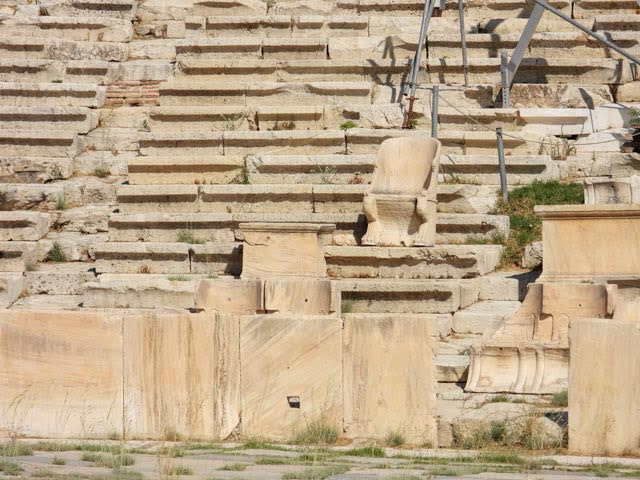


Wednesday morning we booked a walking tour of the Acropolis. It was a three hour tour that started at the ungodly early hour of 10 a.m. We took the metro the Akropoli stop and met our tour guide there. The group was about 20 people, mostly Americans. Our tour guide spent the first few minutes warning us to be care of everything; the heat, the sun, the steps, the slipperiness of everything due to the dust and marble walking surfaces, pickpockets and other criminals. The Acropolis is the ancient citadel that stands on the hill overlooking the city. On its grounds stood a number of temples, meeting halls and theaters. Our first stop was the Theater of Dionysus. It was built around 500 BCE and could accommodate 25,000 people.
Our second stop was the theater or Odeon of Herodes Atticus. It was built in 161 CE and is still in use for concerts. We (that is the imperial we, meaning Sue) looked into getting tickets but could not manage it (the season was over) — maybe next time we are here. We then started walking up the steeper portion of then climb (Guide: “Be careful! Be careful! this next section is very slippery! I know many people who have fallen! Especially coming down!!!”) where the stairs narrowed and the number of people increased. We reached the Propylaea, or the main gate of the Acropolis, along with about 5 million other tourists. It is hard to get an appreciation of the 2,500 year old structures when you are pushing an shoving among a sea of people. He’s only exaggerating a tiny bit. Once through the gate, we moved around the Parthenon and, thankfully, due to the size of the grounds, the crowds thinned out.
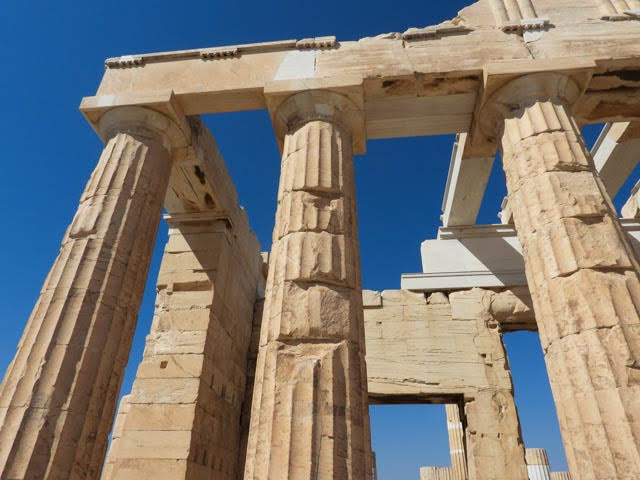
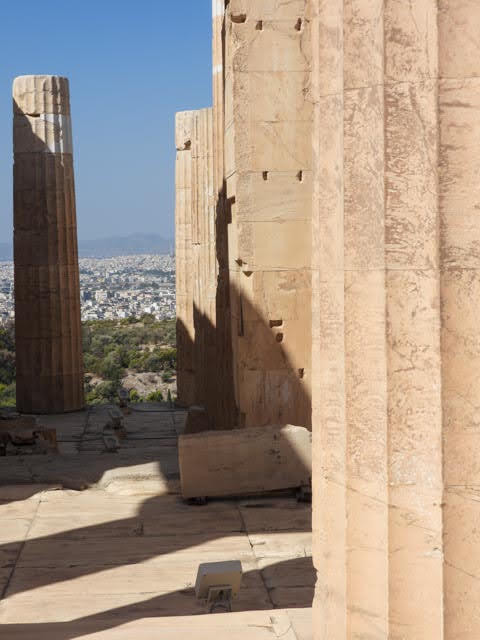

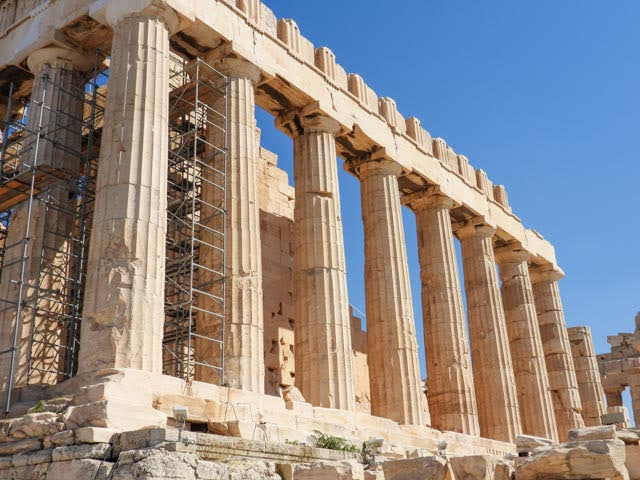
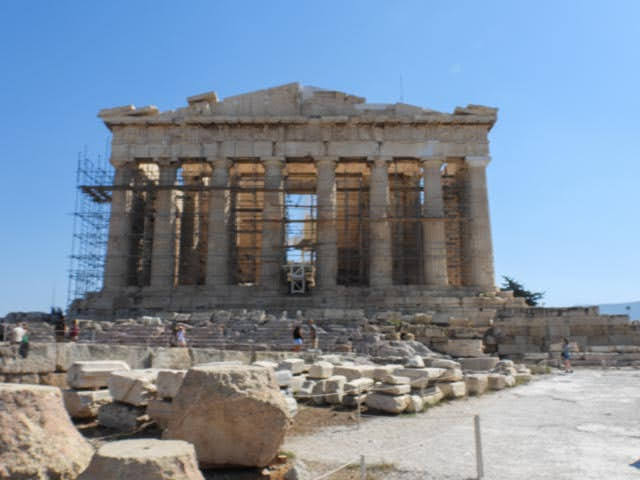
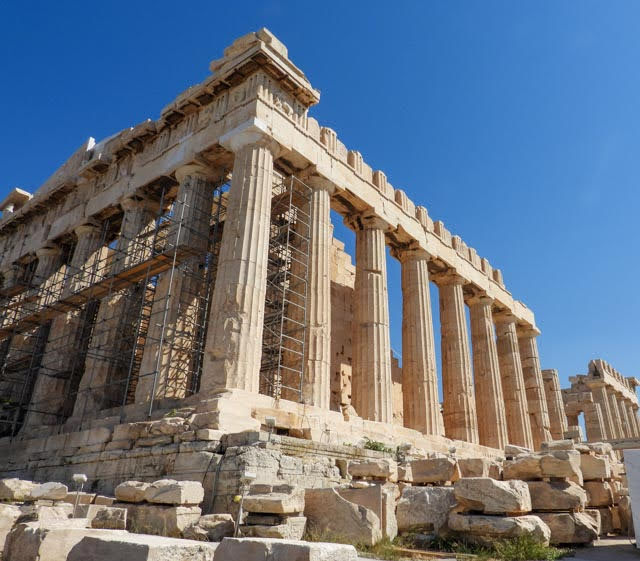
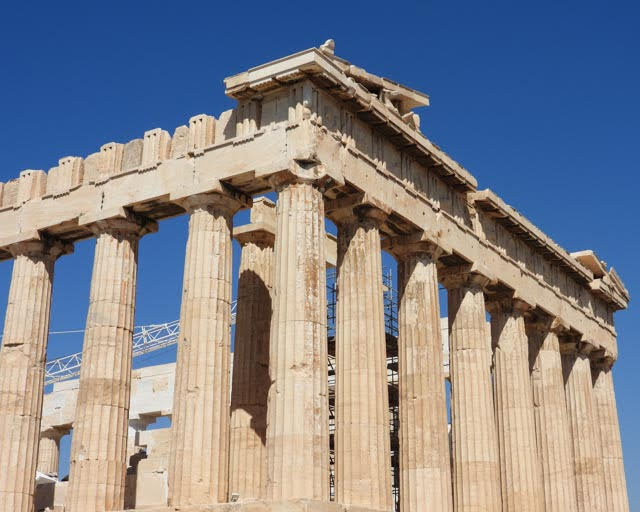
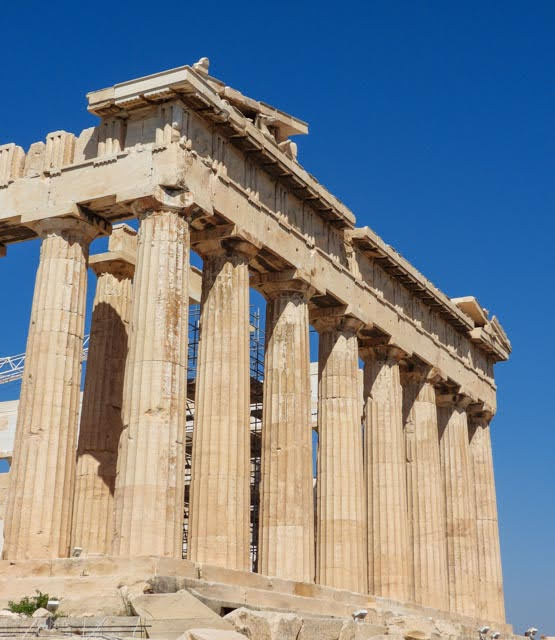

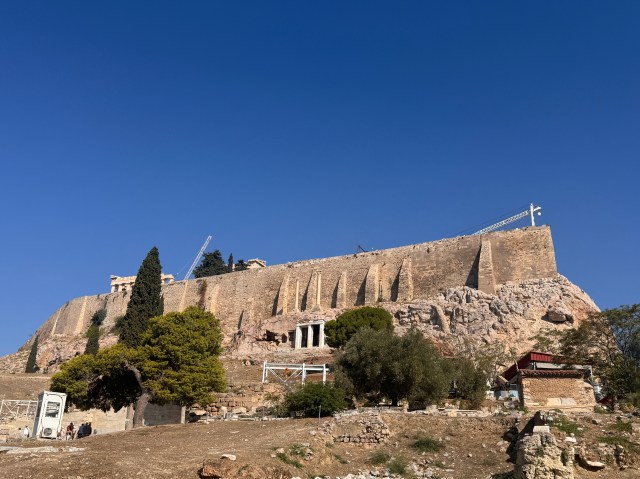


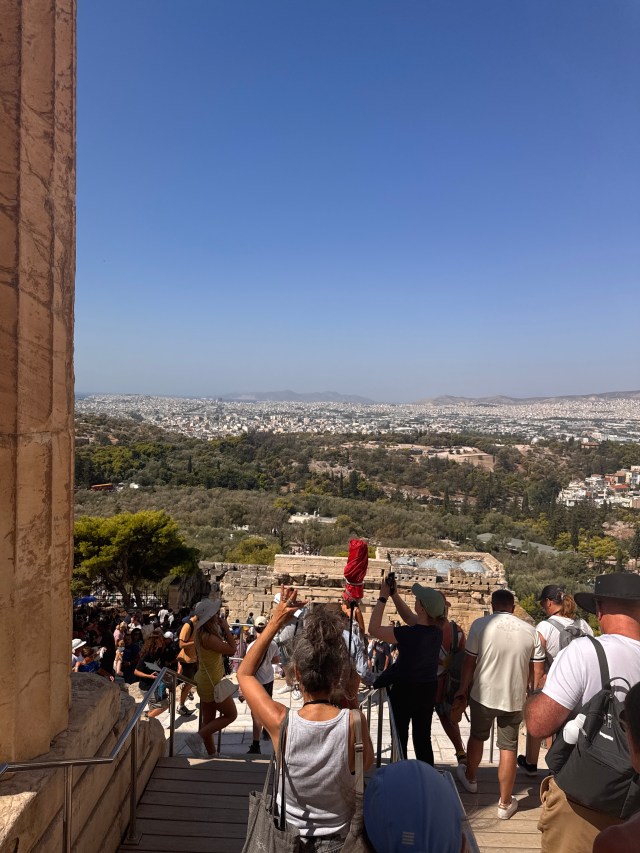
We took lots of photos and learned about its history. The short version is that it was built in celebration of the goddess Athena in the 5th Century BCE, then converted to a church when Christianity spread to Greece, then became a mosque when Ottomans ruled Greece. In the 17th Century, the Turks and Venetians fought over Athens. The Turks decided to store munitions in one part of the building which the Venetians then bombed, destroying much of it. In the 19th Century, the British came and took anything that was still there and put it in the British Museum in London and won’t give it back. It seems that the Greeks are unhappy with that.
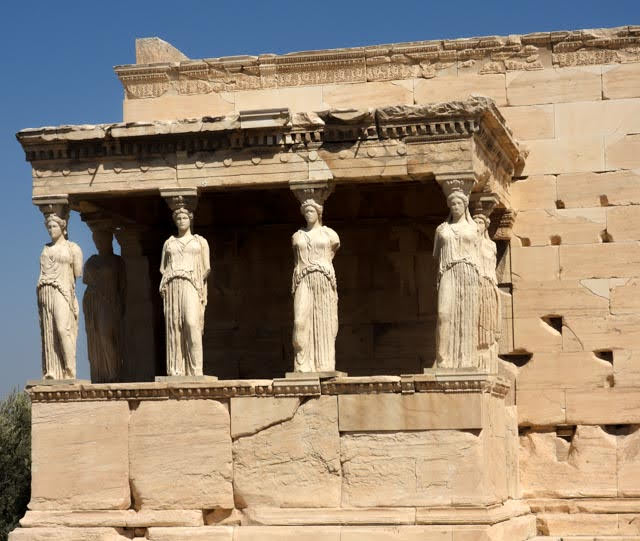
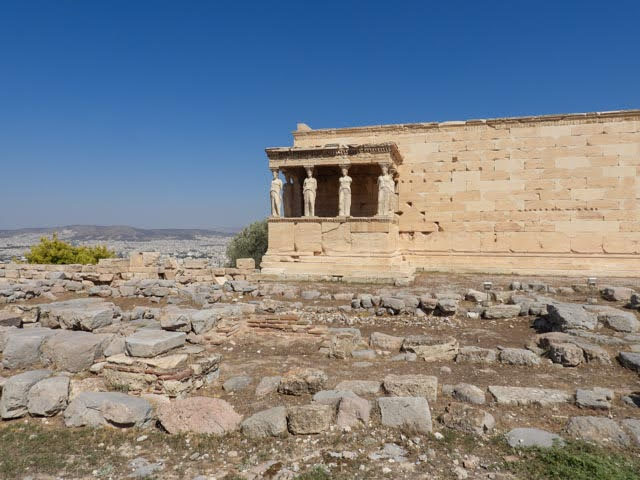
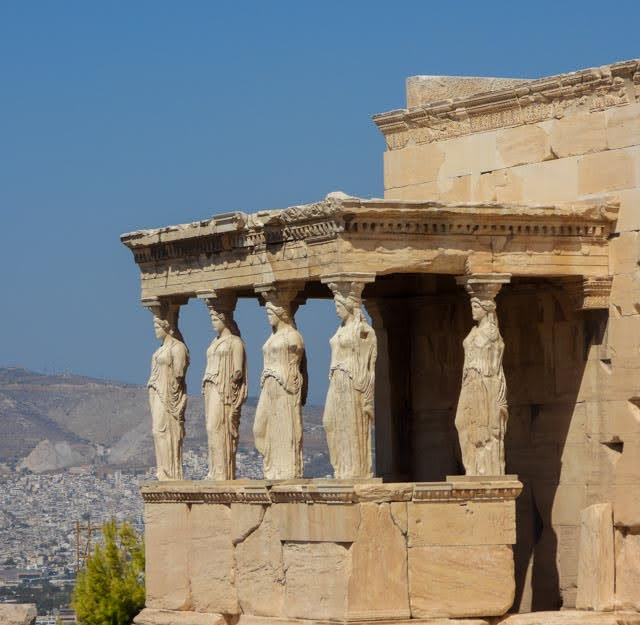
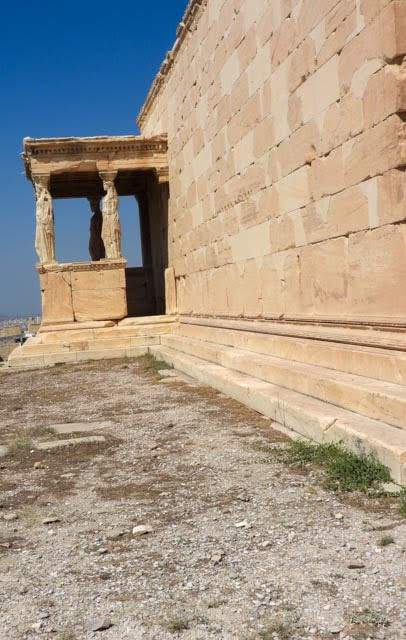
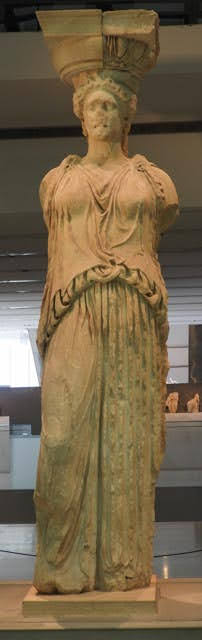
We walked over to the Erechtheion, which is a temple that was dedicated to Poseidon and other gods. According to our guide, Poseidon and Athena both wanted to be the god of Athens. They each provided a gift to the city in a bid to be god. Poseidon offered seawater, while Athena offered an olive tree. I could be a god just for an olive tree? I want that deal! The people of Athens chose Athena because they could see the use of the olive tree, but not the seawater. So, Athena got the Parthenon, while Poseidon (and the other gods) got the smaller Erechtheion. It contains “The Porch of the Maidens” where six “maidens” hold up the roof of the porch with their heads. The originals are in the Acropolis Museum, except for one which was — all together now: Stolen by the British with the express permission of, who else? The Turks!
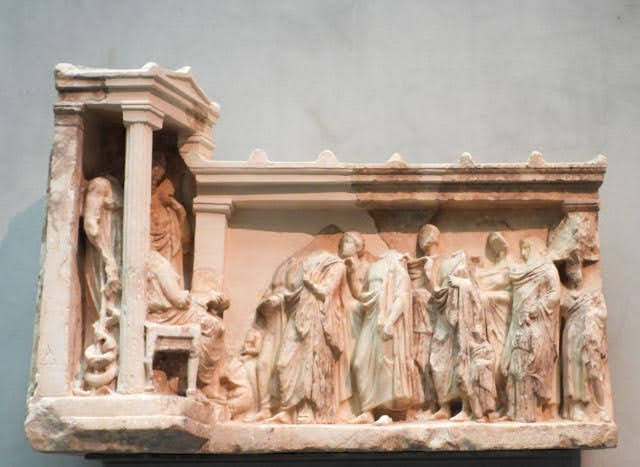
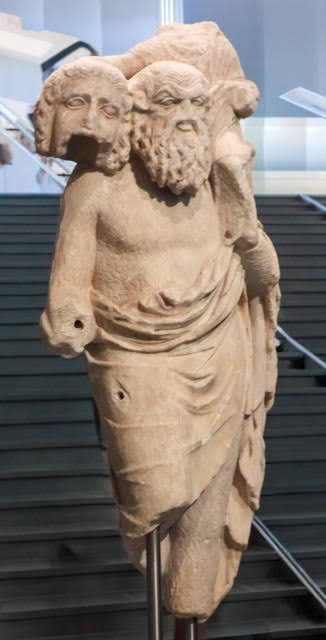
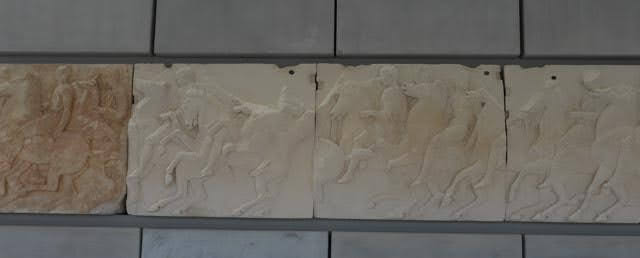
We climbed down off the Acropolis (Guide: “Be careful! Be careful! this next section is very slippery! I know many people who have fallen! Especially coming down!!!”) and headed to the Acropolis museum. At the south base of the Acropolis, the Greeks spent €150million to build a start of the art museum to display the artifacts of the Acropolis. It is gorgeous museum and brilliantly designed. The top floor is offset from the rest of the building so that it mirrors the direction and size of the Parthenon. They have placed the pillars at the same spacing as the pillars of the Parthenon and have displayed copies of the marble frieze from the top of the Parthenon (Guide “The British promised that they would return it once we had a safe place to display them so we built this gorgeous museum…but you can see they aren’t here.” If the British had to give back everything they plundered, their museum would be empty.) In the photo below of the frieze , you will see one that is more weathered, that is an original, the white ones are reproductions of the ones in the British Museum. Can you believe the are still in the British Museum even after we spent €150 million building this beautiful home for them?
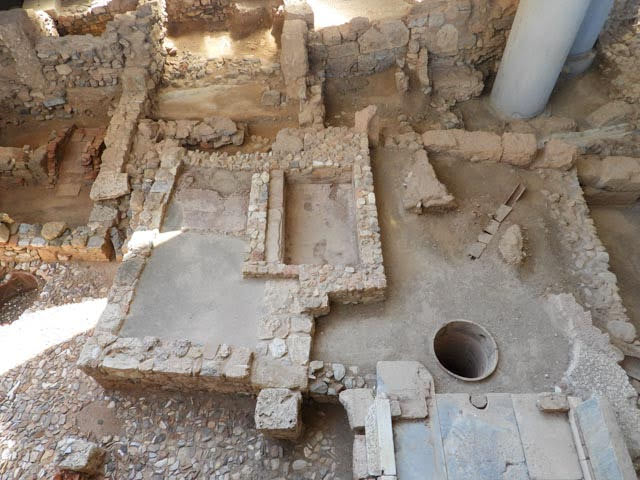

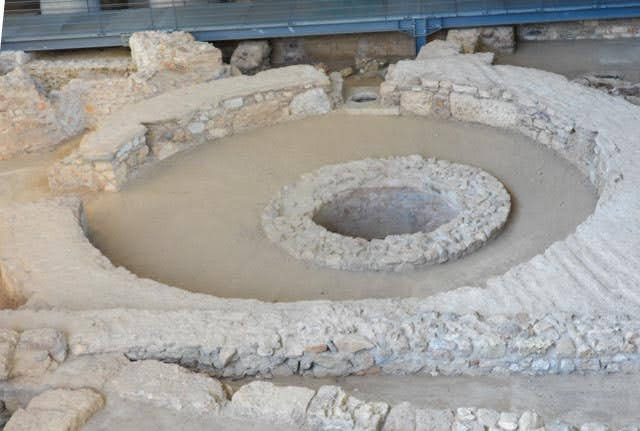

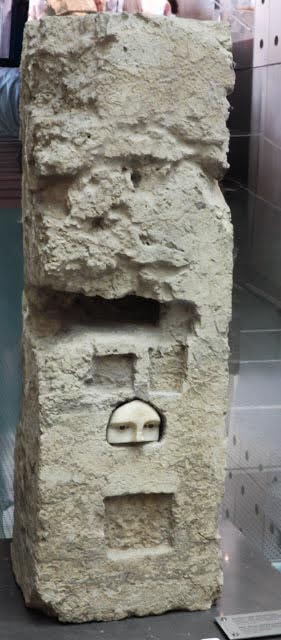

There is, of course a Lego model of the Acropolis done by some Australian University students. Does it make you wonder about their education system?

Once we were finished in the museum, we took the metro back to our neighborhood and I chose a place for lunch. I found a place that looked wonderful called Miravilia Kitchen. Unfortunately, I misread the directions and we got off the metro on the wrong stop and so we had a smallish death march through not the greatest part of town — oops. However, the restaurant was great, and we had a wonderful lunch, to end an enjoyable first outing in Athens.
 Doing It On The Road