
We arrived in Nairobi in the evening. We were whisked through immigration after being fingerprinted and driven to our hotel. So far, so good. Security is tight. Bomb-sniffing dogs, a mirror to sweep under the car, and x-ray machines for our bags and ourselves.
Having made it through the security gauntlet and checking in, we met up with cousin Robin, who had arrived an hour or so earlier. She doesn’t waste a minute and had already looked into some activities for us. We decided on a walking tour of the city, which would include the Nairobi National Museum.
After a good night’s sleep in a very nice hotel, the aforementioned Villa Rosa Kempinski, we met our guide, David, or Jenga. Many Kenyans have both an English and a name from their culture. He preferred Jenga. When we said walking tour, we didn’t realize that we’d leave the hotel and walk along the dirt embankment along the highway and then cross it (no there were no lights or crosswalks).
If you’re imagining a national museum such as the Smithsonian, think again. We are incredibly spoiled. This museum contains some artifacts of pre-, colonial, and post-independence Kenyan history with glorified notecards or posters for explanation. Kenya comprises 42 ethnic groups smooshed into a country and united by Swahili, often a second language. School is taught in English. The museum also housed a room full of stuffed birds and a stuffed white rhino. No interactivity. Several school groups were on field trips there and they seemed to be enjoying it.
The Nairobi Snake Park and Aquarium can also be found within the compound. A very nice volunteer took us around and explained all the different ways snakes can kill us: hemotoxic, neurotoxin, cytotoxin, cardiotoxinm and, of course, squeezing. Good to know right before we headed into the wilds of Kenya.
We wandered around the central business district, which didn’t offer a lot, it’s dusty, dirty and chaotic and then had a gigantic lunch. Jenga told us that Nairobi is experiencing growing pains. The roads are expanding, but that just leads to more traffic, which is very crazy since there really aren’t any traffic lights, just many roundabouts. We did see some familiar sites: a typical grocery store plus KFC, Domino’s and Cold Stone Creamery.
Every city has some kind of craft market and Nairobi is no except. The Masai market is like a flea market where pretty much everyone is selling one of a few repetitive items: paintings, wooden carvings of animals, beaded jewelry or clothes. It hardly seemed like these artifacts were handmade, although Robin thought she saw a few women making something. We wandered through, but although it is “free to look,” we really had no interest in doing so.
We retired to the roof pool after the hot, dusty walk. In case the sun didn’t warm the water enough, we were warned to stay away from the influx of hot water the pool attendant was pouring into what now seemed like a relaxing bath.
We had dinner with Eileen, who I worked with at Summit in Maryland, and her husband, Sean, who is now a UN judge. They live in a beautiful home on a tree-lined street with lots of birdlife and some monkeys, but the UN requires them to have a guard and the place is gated. It’s just a different way of living. We had a great time (thanks again!).
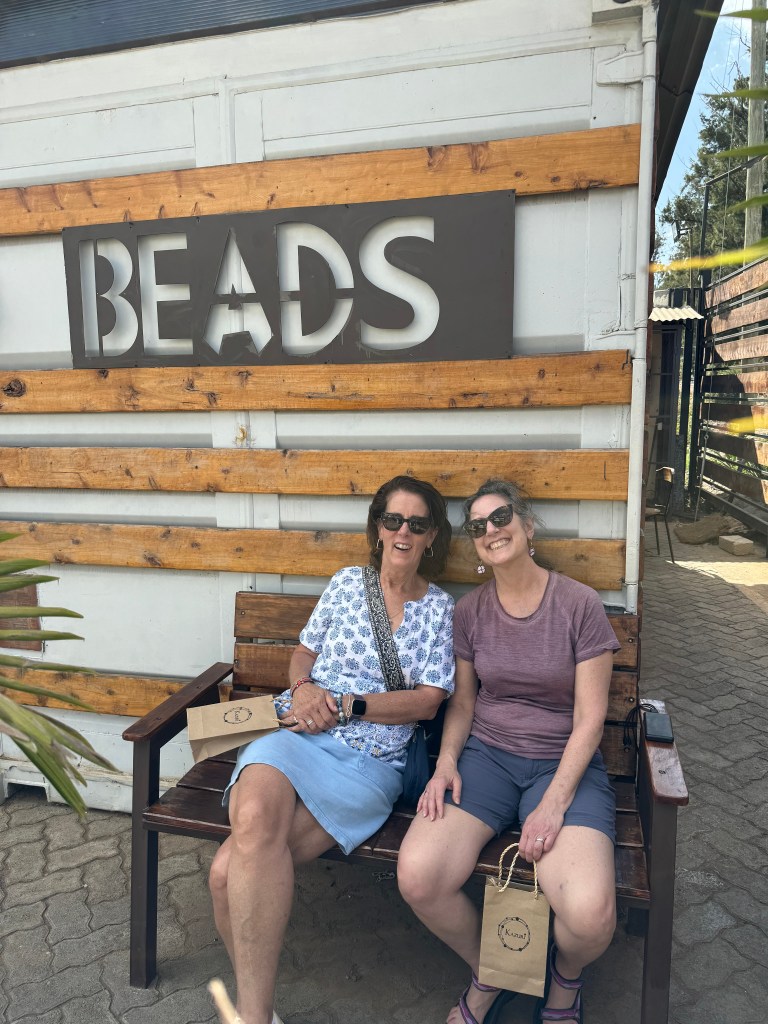
Wednesday, we met up with Eileen again and had a delicious lunch followed by a trip to the Kazuri bead factory (thanks again, Robin), where we got a brief tour and saw the women hand-making beads for jewelry and purchased a few souvenirs. Then we stopped at a mall, which is just like a mall anywhere in the world, and sadly said goodbye to Eileen.




Whenever there is a public building in Kenya, there is also a sign that says, “This is a corruption free zone.” If only signs could make it so. We walked past the national TV station and Jenga told us that you are not allowed to take pictures anywhere near it. The government is protective because controlling the airwaves could mean controlling the country.
That evening we transferred from the Kempinski to the Hemingway, where Tropical Ice planned our stay and transfer to the next part of our adventure: The Jeep safari in the Masai Mara. The Hemingway is a beautiful hotel, but I’m not sure it was worth it to get their in the evening and leave early the next morning.
Our next back-track blog will focus on the Masai Mara. Here’s a preview: It was amazing!


Loved it.
Mom
LikeLike